
Ai for CEOs: The Executive Program, taught by Ed Honour
A six-hour live program on how to get real return from Ai in your organization.
Two 3-hour sessions. Six modules, plus a hands-on workshop. No technical background needed.
Secure My Seat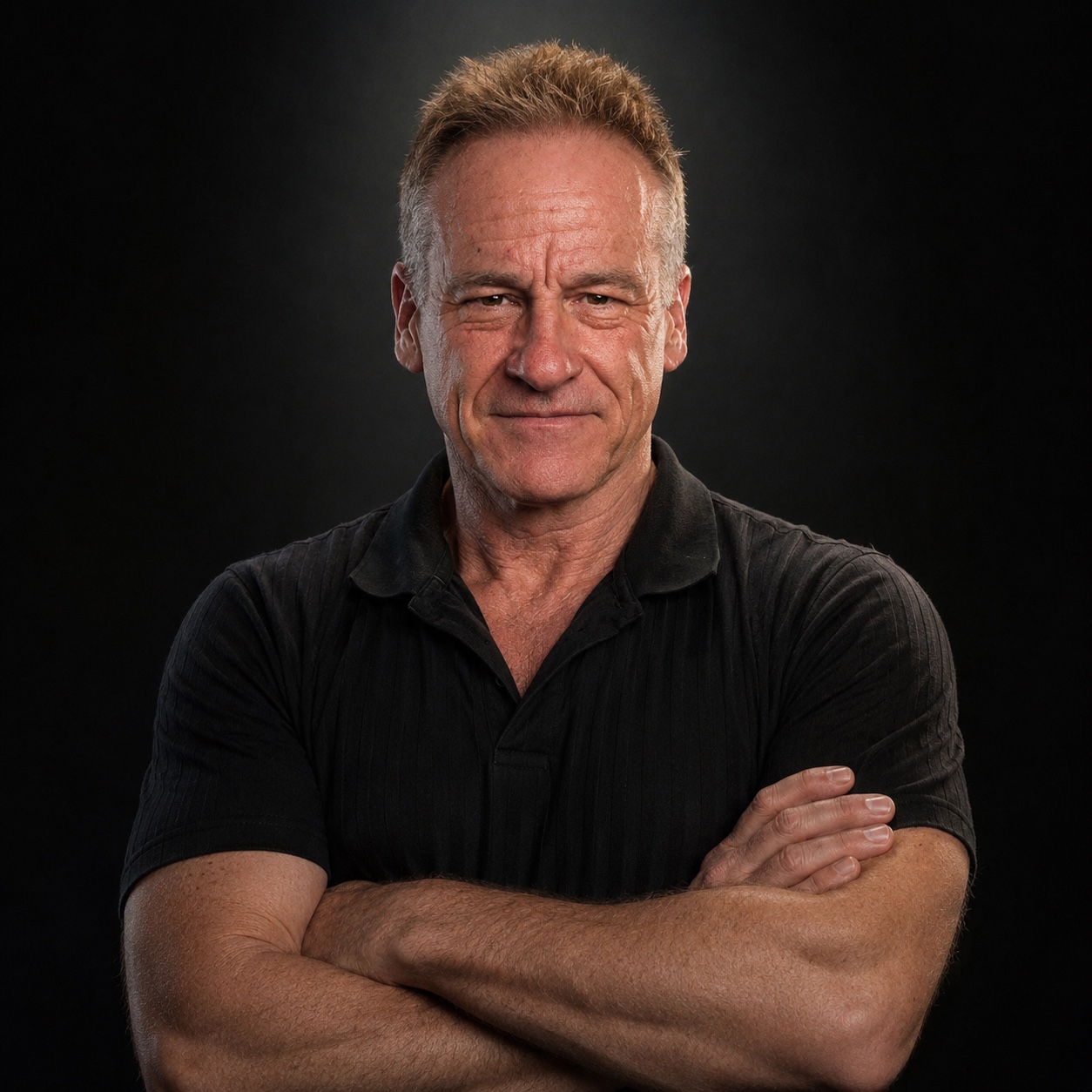
Meet your instructor
Learn Ai from someone with more than 40 years in data science and software
Ed Honour has been building production software since 1988. He started as an Oracle developer and application architect, and he wrote the book Oracle How-To, published in 1996.
He didn't come to Ai from the hype cycle. He came to it the way an engineer does: by building real systems for real businesses, and finding out what holds up and what breaks.
Today Ed is CEO of Kinetic Seas and a Solutions Architect. Kinetic Seas is a publicly traded company (OTCQB: KSEZ) focused on Ai infrastructure, consulting, open-source libraries and security. He also runs AI Masters, one of the largest Ai learning communities on Skool, where he teaches live every week.
That is who will be teaching you for two days. Not a guru with slides. An operator who shows you what works, and why.
- Building enterprise software since 1988
- Author of Oracle How-To (1996)
- CEO of Kinetic Seas (OTCQB: KSEZ) and Solutions Architect
- Founder of AI Masters, where more than 24,000 members learn Ai
- Former lead architect of a traceability blockchain, and data science work for two US government agencies
"Voice AI is still an LLM underneath. Assume people are going to find ways to break it."Ed Honour, on Threads
Why this exists
of organizations are getting zero return on generative Ai. MIT, State of AI in Business 2025
MIT's 2025 State of AI in Business report found that 95% of organizations are getting zero return on their generative Ai investments, even though enterprises have spent $30 to $40 billion on adoption. Ai capabilities have improved a lot since that report came out in July 2025, but returns still haven't caught up.
The problem usually isn't the technology. It's how projects are chosen, scoped, governed and measured. This program takes your leadership team through the full Ai lifecycle: picking the right projects, defining success up front, building with proven practices, and measuring results after launch.
What you will learn
Project Selection
How to find the projects with the best ROI that fit your existing infrastructure and data governance.
Defining Success
How to set measurable success criteria before a project starts, then track against them during development and after adoption.
Governance, Risk and Responsible Use
The policies, oversight and accountability structures that let you scale Ai without exposing the business.
Data Privacy and Security
How to protect sensitive data (PII, PHI, PCII) and meet requirements such as GDPR, HIPAA and FedRAMP.
Infrastructure Options
The tradeoffs between public Ai services, private cloud platforms such as Amazon Bedrock and Microsoft Foundry, and sovereign Ai that runs open-weight models on-premise.
Real-World Use Cases
Popular use cases, plus what other organizations learned from their successes and failures.
Who should attend
- CEOs and presidents who must decide where Ai fits in company strategy and how much to invest
- CFOs responsible for budgets, ROI and vendor spend
- CIOs, CTOs and CISOs who own infrastructure, security and data decisions
- COOs and business unit leaders whose teams will use Ai every day
- General counsel and compliance leaders managing regulatory and contractual risk
- Board members who need to ask management the right questions about Ai
No technical background is needed. Teams get the most value when several executives attend together, because they leave sharing the same language and the same framework.
Program agenda
Day 1 · 3 hours: Strategy and Planning
| 20 min | Welcome: why most Ai investments fail. What Ai can and can't do today, and where the 95% go wrong |
| 50 min | Module 1: Project selection. Scoring opportunities by value, feasibility, data readiness and risk |
| 10 min | Break |
| 50 min | Module 2: Defining success. Setting baselines, KPIs and go/no-go gates before you spend |
| 50 min | Module 3: Governance, risk and responsible use. Policies, human oversight and accountability |
Day 2 · 3 hours: Execution and Results
| 10 min | Recap and questions from Day 1 |
| 45 min | Module 4: Data privacy and security. Protecting sensitive data and meeting GDPR, HIPAA and FedRAMP requirements |
| 45 min | Module 5: Infrastructure options. Public Ai services vs. private cloud vs. sovereign on-premise Ai |
| 10 min | Break |
| 50 min | Module 6: Real-world use cases. Successes, failures and the rise of Ai agents |
| 20 min | Workshop: your first 90 days. Teams turn their scored projects into a starting action plan |
Between sessions: Each participant uses the Ai Project Scorecard to rate two or three possible Ai projects from their own organization and brings them to Day 2.
What you take home
- Ai Project Scorecard to rank and prioritize Ai opportunities
- Success Criteria Template for setting KPIs, baselines and decision gates before a project starts
- Ai Governance Policy Starter Kit with a sample acceptable-use policy and oversight checklist
- Infrastructure Decision Guide comparing public, private cloud and sovereign Ai options
- Vendor Evaluation Questions to use with Ai vendors and consultants
- Your 90-Day Ai Action Plan, drafted during the program
- Program slides and a certificate of completion
Event details
| Dates | Tuesday 17 and Wednesday 18 November 2026, 9am to 12pm Melbourne time, live online. |
| Time | Two 3-hour sessions, 9am to 12pm Melbourne time (AEDT) each day |
| Format | Live online, with interactive discussion and a hands-on workshop |
| Includes | All materials and take-home tools |
Investment
A$3,000 per person (AUD).